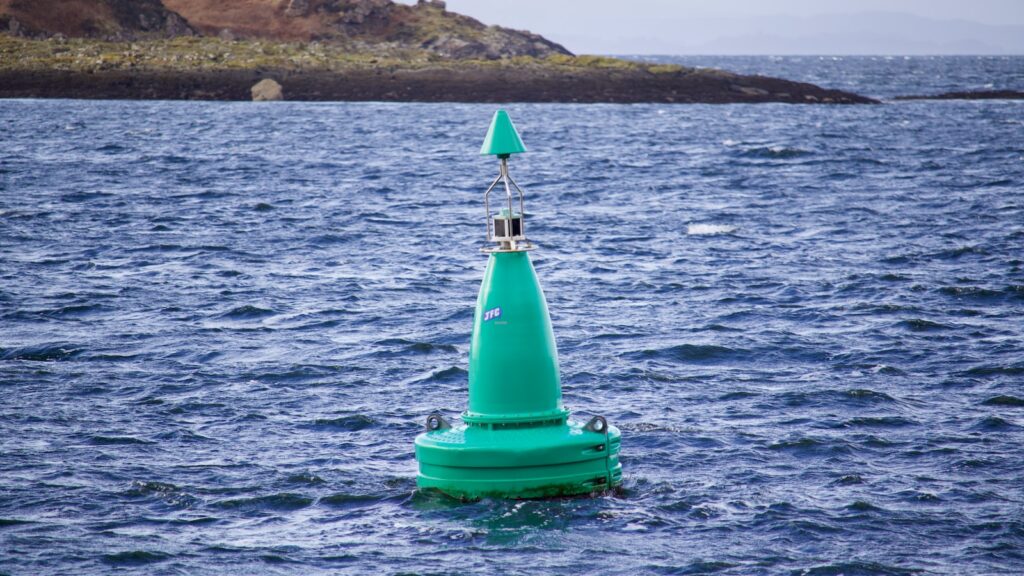
In 2016, more than 700 lives were lost as a result of recreational boating accidents in the U.S. and its territories. That number improved slightly in 2022, but it’s still way too high! Most of these fatalities happen during the peak boating months of June, July and August. And for many of them, alcohol, and not being able to read the “road signs” or navigational aids, were contributing factors.
(This page may contain affiliate links, which means I may earn a small commission if you click through and make a purchase. You can read our Affiliate Disclosure here.)
There are those who have spent a great deal of time on the water and have paid little or no attention to the markers that have been placed by the United States Coast Guard. The purpose of these markers is to help boaters have a safer and more enjoyable time on the water. But if you don’t know what they mean, a day of fun could turn ugly in a hurry.
A really great website — BoatSafe.com — has myriad articles on boating safety, navigation and boating quizzes to test your knowledge.
If you’ve been looking for a place to get your boating license online, here’s a site that has the license requirements and courses listed by state as well as Canada. BoaterExam.com
Categories of Marks
Know that there are two general categories of marks – aids to navigation – that you will encounter while boating. They are 1) lateral marks and 2) non-lateral marks. Lateral marks identify the port and starboard sides of a route. Non-lateral marks have no lateral significance; they mainly supply information and regulation.
Types of Marks
There are two general types of marks. They are 1) buoys and 2) beacons. Buoys are floating objects anchored at specific locations and appear on charts as diamonds with small circles to indicate approximate position. Beacons are marks that are permanently attached to the earth’s surface. They can be as large as a lighthouse or as small as a post or piling and are usually found in shallow water or on shore. Do not pass close to beacons – you may collide with the very obstruction that they mark!
Red – Right – Returning
This is known as the 3R rule of the U.S. Aids to Navigation System. Of course, it pre-assumes that you have a pretty good idea of which way you are going in the first place. Simply stated, it says: “When Returning from sea, keep Red side-of-channel marks to your Right.” Returning means either entering a harbor or bay from the open ocean, traveling up a river from the sea, or traveling in a clockwise direction around a land mass. Conical-shaped Nun Buoys and triangular-shaped Day Marks (a type of beacon) indicate the starboard side of the channel when coming in from the sea. Cylindrical-shaped Can Buoys and Square-shaped Day Marks show the port side of the channel when coming in from the sea.
Non-Lateral Marks/Aids
The Non-Lateral System of marks – mentioned earlier – is very important to all boaters because it supplies information that may save your boat and even your life.
- Isolated Danger Marks are placed on, above or near a danger that has navigable water all around it. Their shape is called a skeleton tower and the colors are Black and Red horizontal bands with Black at the top.
- Safe Water Marks indicate safe water on both sides and identify the centers of navigable channels. Their shape is spherical if unlighted and the colors are Vertical Stripes of Red and White.
- Special Marks call attention to a special feature of an area. The shape is conical (nun) or cylindrical (can) and the color is yellow.
- Information and Regulatory Marks indicate areas of danger and exclusion areas where boats are not allowed.
- Regulatory Marks are white with orange bands
- Orange Diamonds are Dangerous Area Marks with the word “danger” in black letters within the diamond
- Orange Diamonds with a cross through them are Exclusion Area Marks.
- Orange Circles are Controlled Area Marks with black lettering indicating things such as “No Wake” “No Anchoring” etc.
- Orange Squares or Rectangles are General Information Marks
I realize it is certainly a lot of information to remember. But I hope that it will help you to become a better and safer boater. Nothing can be more humbling on the water than to run aground and tear up your boat because of a simple Mark (sign) that you ignored. You need to know road signs when driving a car. It is just as important to know the waterway signs when piloting a boat. See you On the Lake!
R. Karl