Also known by some as Jack, Jackfish, Wolf, Gator, or Pickeral, Mr. Pike (Esox lucius) has always seemed to have just a bit of an image problem. Its scientific name in fact, is derived from Latin, and literally means “water wolf”. It is a carnivorous fish. There are many who would select the Northern Pike as a tough and worthy adversary, occupying small boats in remote locations of the Great White North for days at a time, hoping to land a trophy and then return it to the water to fight another day.
(This page may contain affiliate links, which means I may earn a small commission if you click through and make a purchase. You can read our Affiliate Disclosure here.)
Name Calling
But almost as many, even more it would seem, would prefer to throw these spunky gamefish ashore to suffer a rather ignominious end. Some prefer to simply smash them over the head with a bat and dump them overboard. Others prefer to malign them with such inappropriate epithets as “snakes” or “Slimies” or “Swamp Donkies”, claiming that they are destroyers of other, “more worthy” gamefish. Most folks that I know would never even think of eating them for dinner and don’t allow them in the boat’s live well. More on that later…
The northern pike with which we are familiar is not all that different from a muskellunge (Esox masquinongy). A hybrid muskie – the tiger muskie – is the hybrid offspring of a northern pike and a muskie. The male of that union is usually infertile, has characteristics of both parents, and does have some pike genes. (As an interesting aside, the muskie – also spelled musky – came from the name maashkinoozhe, was used by the Ojibwa Indians, and meant “ugly pike”.)
Both Muskie and Pike are members of the family Esocidae. They’ve been cruising the waters of Europe and North America for the last 65 million years. And besides some differences in coloration and a few other items – like the number of sensory pores on each side of the lower jaw— the two predators are remarkably similar. At least that is, until you get one on your line, which is when the fun really begins!
Northern Pike Features & “the Slime”
Specifically, and according to the Minnesota DNR, “The following northern pike features distinguish it from the muskie: light markings on a dark green background; lower half of the cheek completely scaled; five or fewer pores on each side of the underside of the jaw; and rounded tail tips.” There is a single dorsal fin and the upper half of the gill cover, and the entire cheek has scales.
Anyone who has ever caught a northern pike is also well aware of the fact that they have a particularly heavy slime coating. This likely leads to the unwanted nickname “slimie” that I mentioned above. All fish have it. They secrete a mucoprotein protective slime coat that covers the scales and skin and acts as a defense against invasion by bacterial, parasitic, and fungal pathogens.
It is the fish’s first line of defense against infection following things like cuts and abrasions that result from netting and handling, as well as from combat with other competitors – even other pike. If this first line of defense is broken, essential electrolytes are lost, resulting in dangerous stress to the fish.
The result can often be fatal. Luckily for Mr. Pike, he is not so delicate as, say, a walleye (whose slime coating is relatively thin by comparison). The heavy slime coating on a pike that makes him so “undesirable” is exactly what keeps him alive after a battle with you and your net!
Habitat and Mating
In general, northern pike inhabit protected, weedy bays; the smaller ones will stay there for the majority of the year, while the larger ones prefer deeper, cooler (~65 degrees F.), more oxygenated waters during the heat of the summer.
Pike can reach maturity in as little as a single year, when females are only about 30 cm (12 inches) and males are but 20 cm (9 inches). The average though, is about three to four years for females and two to three years for males. The spawn takes place in the spring of the year just after ice-out, when the water reaches approximately 45 degrees F. (although pike have been known to lay eggs beneath the ice…). The spawn will continue for several weeks, or until the water reaches roughly 52 degrees.
Pike head into even shallower water in the spring and the big males are first on the scene, preceding the females by a week or two. Females can continue the mating process for several days in a row and deposit as many as 100,000 eggs that will adhere to the flooded vegetation for about two weeks before hatching.
The embryos are able to swim after hatching, but remain on the bottom for a while, feeding on plankton. Later, the young fry will begin to eat small invertebrates but soon make the transition to an all-fish diet when their size reaches about two inches in length.
Low Survival Rate
Only about five percent of the free-swimming newborns will survive to reach a length of three inches. Part of the survival problem being that not only do pike have a voracious appetite (they can eat three to four times their own weight during the course of a year), but they are also cannibalistic. The young fry look to be just as good a meal as any other fish in the vicinity, and pike can spot prey up to fifty feet away!
Efficient Predators
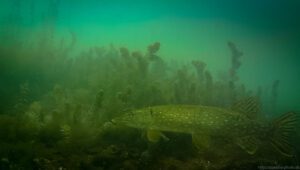
As efficient predators, northern pike can have significant impact on species upon which they prey. Northern pike are notorious for lurking in the cover of vegetation in a lake’s clear, shallow, waters near shore.
Smaller pike tend to lie in ambush waiting for an unsuspecting meal to pass within range, whereas the larger ones will cruise deeper waters in pursuit of larger prey. Pike will consume large numbers of smaller fish – about 90 percent of their diet – but seem willing to supplement their diet with any living creature they can get their razor-sharp teeth into.
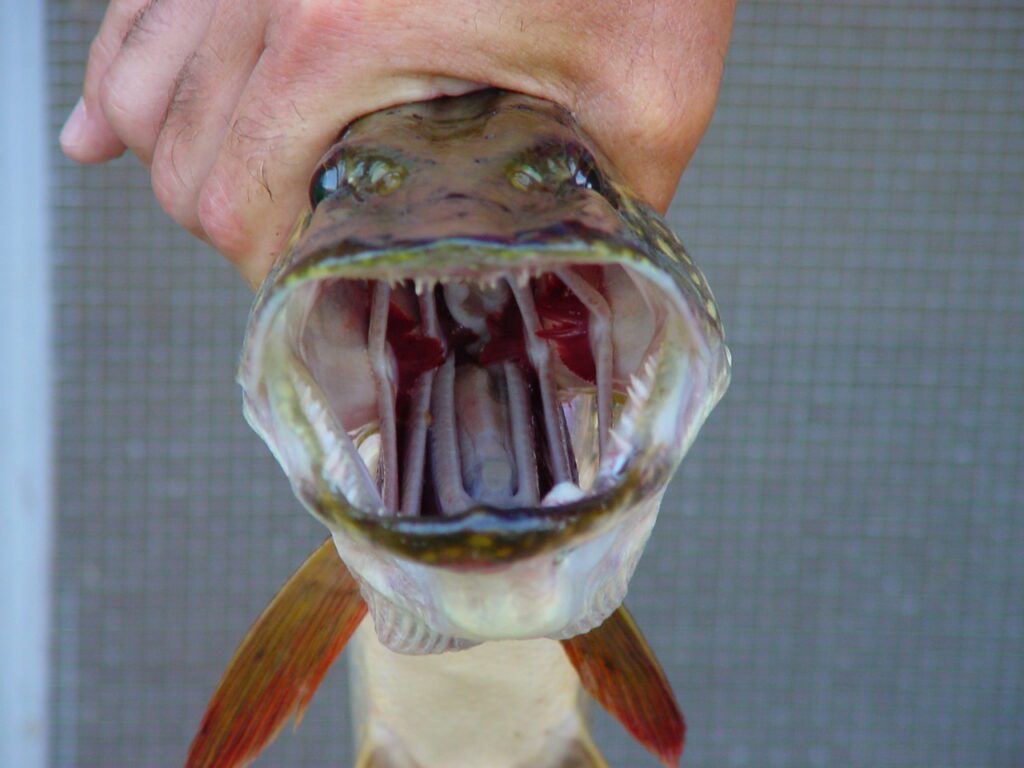
A close look at the mouth of a pike will quickly show at least one of the reasons that the pike is such a successful hunter. Those teeth are angled toward the back of its mouth. Once impaled, escape is quite unlikely. Unfortunate victims can include frogs, crayfish, small rodents and even waterfowl. I have personally watched as a baby loon disappeared beneath the water in the jaws of a very large pike, never to surface again.
Rapid Growth Rate, Diet and Record Size
A northern pike’s preferred food size is approximately forty percent the size of the pike itself! And many an angler has at least one story about reeling in a trophy-sized walleye, only to have it attacked by a large and hungry northern pike.
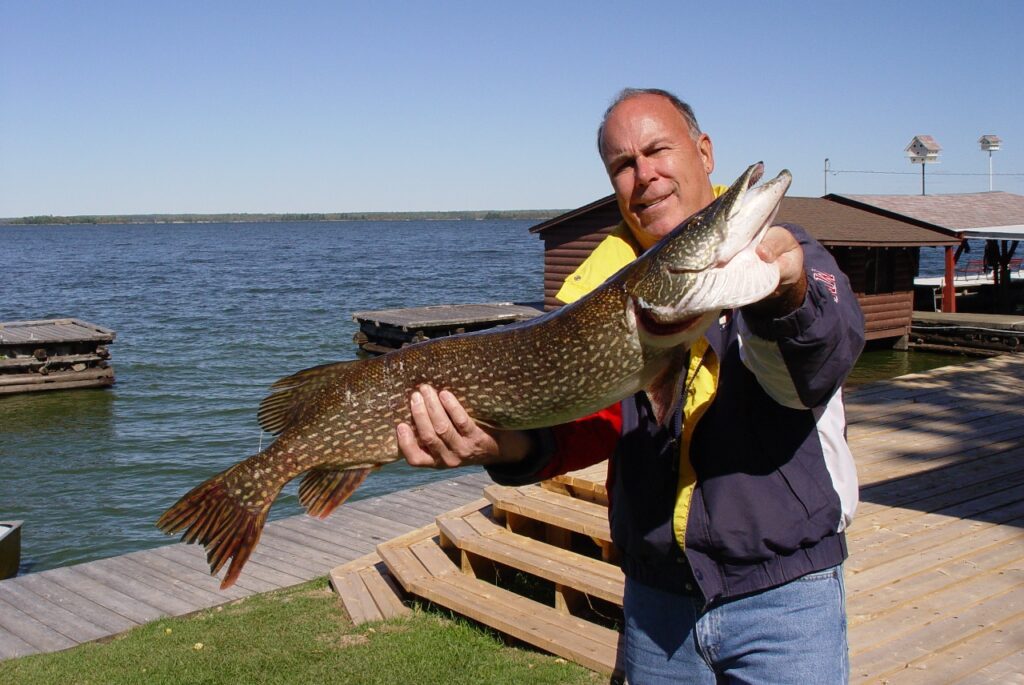
Its eating habits will cause Mr. Pike to grow rapidly in size, achieving lengths in excess of 48 inches and weight in excess of 30 pounds (The Minnesota state record is 45 pounds, 12 ounces, caught in Basswood Lake (Lake County), on 16 May 1929). It’s also a well-known fact that pike will strike at just about anything and any lure you toss his way.
And that is just one of the reasons that northern pike are such a sought-after species of game fish. They are usually taken by trolling and casting, although in the hot summer months, still-fishing in deeper waters near weed beds is recommended. Unlike the muskellunge, which often breaks the surface, spinning and dancing like a banshee in its struggle with the angler, the muscular northern pike seems to prefer moving his fight with the hook into deeper water.
Y-Bones: the Reason for Not Eating Northern Pike
Another reason that anglers specifically target northern pike – this author included – is that contrary to the opinion of many, northern pike make an excellent meal! But there are some caveats to which one must pay attention in this regard.
Perhaps the single biggest reason that most people don’t eat pike is due to the incredible number of “y-bones” in the fish. Trying to enjoy northern pike without removing these pesky bones is practically impossible. Oddly, even though these bones are actually very easy to remove, most folks don’t know how to do it. So, they avoid pike altogether. (See my instructions on how to remove the y-bones.)
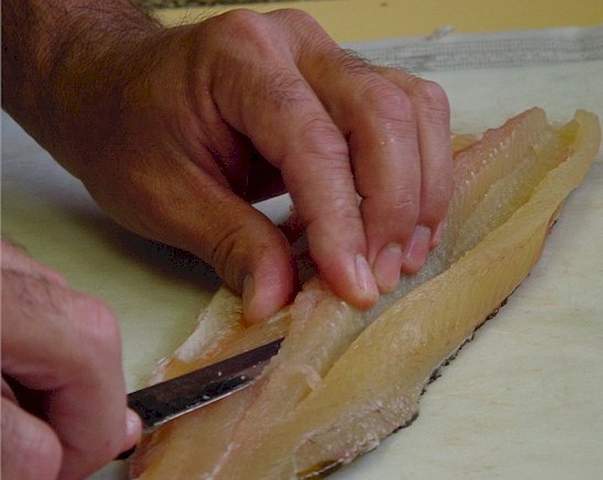
A second reason is the slime factor. The slime on a pike is not only excessive, but also highly acidic and will impart a particularly nasty flavor to the flesh if not thoroughly removed through rinsing. Removing the skin quickly is obviously preferable, especially if a meal is forthcoming.
What’s for Dinner?
Soaking the fillets for a while in a mixture of egg and milk also helps remove unwanted flavors imparted by any remaining slime. Lastly – and most find this difficult to believe – the larger the pike, the better and milder the flesh. And this is exactly opposite to what the case is for the more sought-after walleye (The best tasting “eaters” for walleye are in the 14-16-inch range).
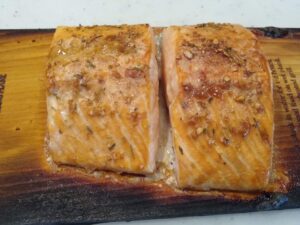
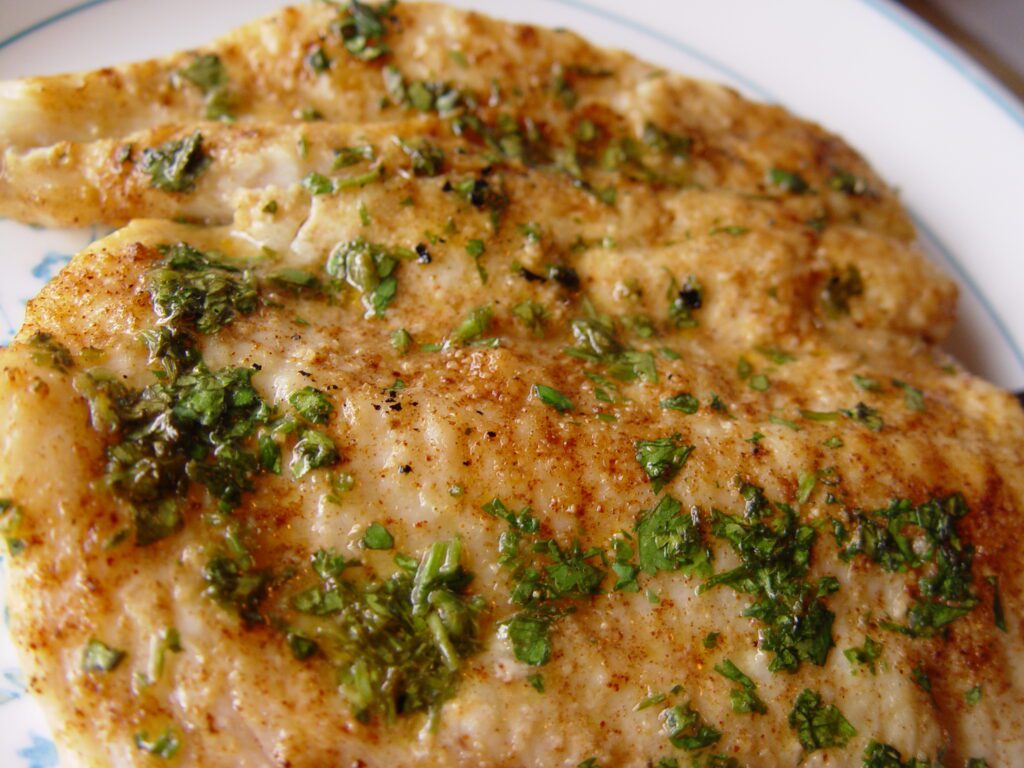
Flesh from a large pike is much whiter, flakier and tastier! Three-five pounds and larger make for some incredibly good eating pike! My favorite is grilling a just-caught pike that weighs about three or four pounds (view my recipe for Mesquite Grilled Margarita Pike and other fish recipes).
Northern pike reside at the top of the food chain and, when full grown, their only real enemy – besides perhaps bears (during the spawn when pike are in the shallows) – is man. Mr. Pike is an aggressive and worthy opponent, providing a great battle for any angler. It’s also a rewarding meal as well, deserving of more respect than he is often given.
So, if you don’t care for the slime or the bones, simply return him to the lake so that he may grow bigger and provide a better fight for another angler. As always, I hope to see you On the Lake!
rk